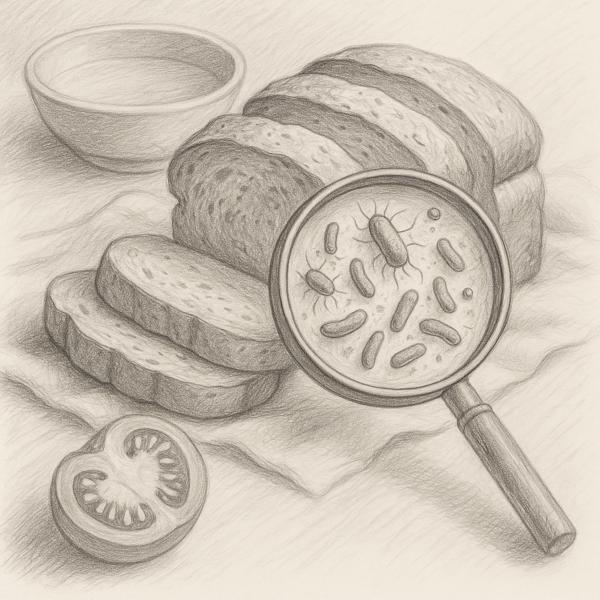
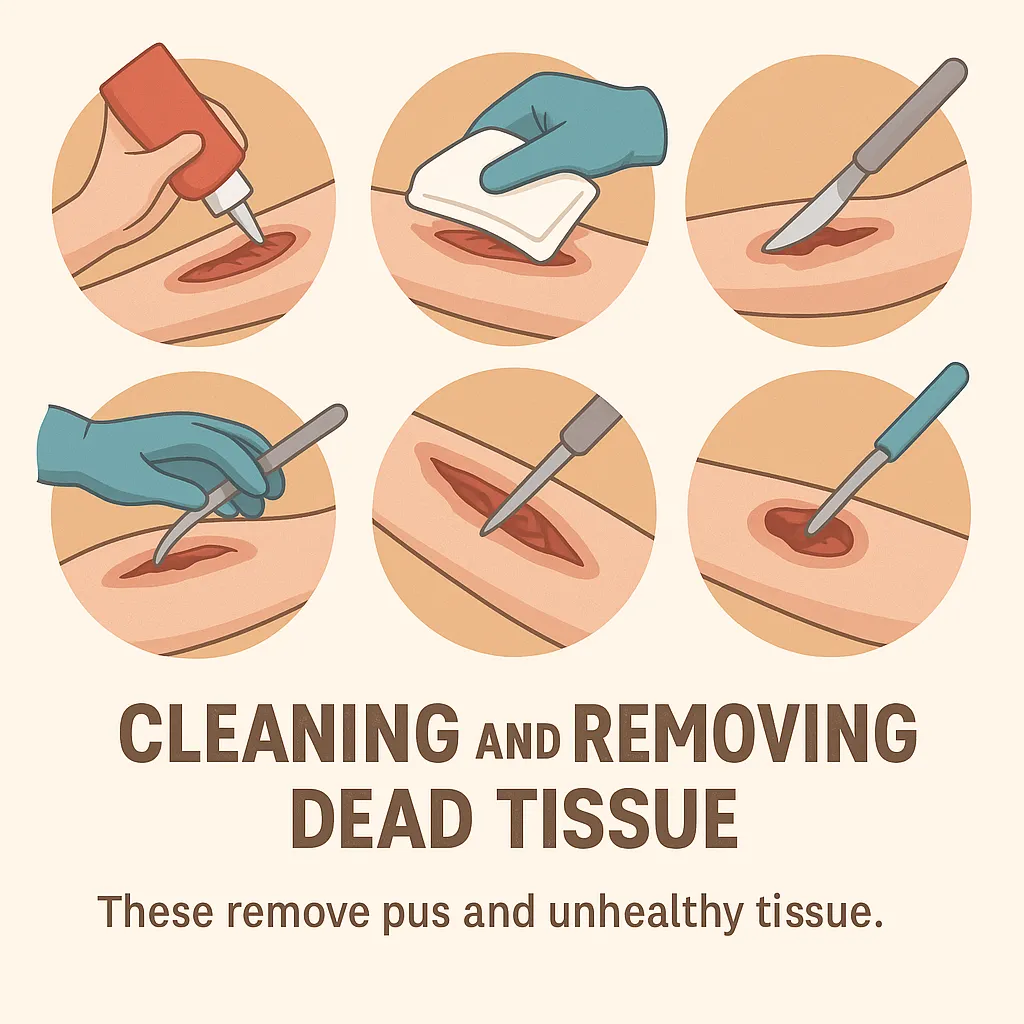
When a wound is dirty, infected, or filled with pus, healing cannot take place properly. The body first needs cleaning, drainage, and removal of unhealthy tissue.
Acharya Sushruta described a special phase of treatment in Shasti Upakrama that focuses on wound cleansing and detoxification. These methods are still the foundation of modern wound care today.
Prakshalana – Washing the Wound
Prakshalana means thoroughly washing the wound.
This helps to:
- Remove dirt and debris
- Reduce bacteria
- Prepare the wound for healing
Modern example:
Doctors use saline wash or sterile water irrigation to clean wounds before dressing.
Pariseka – Pouring Medicated Liquids
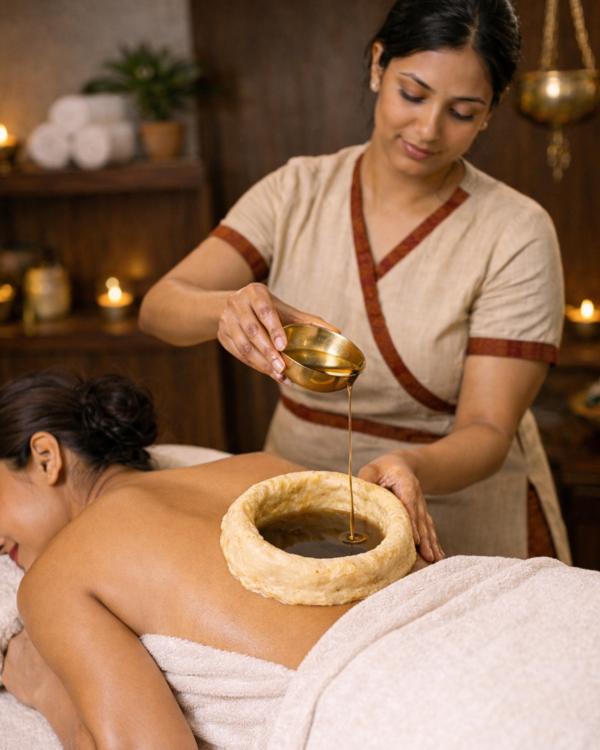
Pariseka is the process of pouring medicinal liquids continuously over the wound.
This helps to:
- Kill germs
- Soothe the wound
- Reduce bad smell
Modern equivalent:
Use of antiseptic solutions like povidone iodine or chlorhexidine for irrigation.
Shodhana – Detoxifying the Wound
Shodhana means purification of the wound.
Its purpose is:
- To remove toxins
- To make the wound clean and healthy
- To prevent infection from spreading
Modern practice:
Antibacterial wound dressings and antimicrobial ointments work on this same principle.
Chedana – Cutting Dead Tissue
Chedana means cutting and removing dead or damaged tissue.
Dead tissue prevents healing and can spread infection.
Modern medicine calls this:
Surgical debridement, where unhealthy tissue is removed with sterile instruments.
Bhedana – Opening Pus-Filled Areas
Bhedana is the procedure of opening swollen, pus-filled areas.
This prevents:
- Pressure buildup
- Severe pain
- Spread of infection
Modern equivalent:
Incision and drainage of abscesses.
Lekhana – Scraping Unhealthy Tissue
Lekhana means gently scraping away unhealthy layers of tissue.
This helps to:
- Create a fresh wound bed
- Improve blood supply
- Promote faster healing
Modern technique:
Curettage or mechanical debridement.
Visravana – Letting Out Pus
Visravana refers to controlled drainage of pus and infected fluids.
When pus stays trapped, it can:
- Damage healthy tissue
- Increase pain
- Delay healing
Modern method:
Drainage of abscesses using surgical drains.
Pacana – Helping Pus to Mature
Pacana helps immature pus to become mature and ready for drainage.
This is important when the abscess is deep and hard.
Modern example:
Applying warm compresses or heat packs to bring the pus to the surface before drainage.
Raktamokshana – Removing Bad or Stagnant Blood
Raktamokshana is controlled removal of contaminated or stagnant blood from the wound area.
This improves:
- Oxygen supply
- Blood circulation
- Healing response
Modern comparison:
This is similar to controlled bloodletting in special conditions or modern techniques that improve microcirculation.
Why This Phase Is Important
Without proper cleansing, a wound cannot heal properly. Even modern surgeons follow this order:
- Clean
- Drain
- Remove dead tissue
- Prevent spread of infection
Sushruta described this process perfectly thousands of years ago.
The cleansing phase of Shasti Upakrama is the backbone of wound treatment. Whether ancient or modern, the golden rule remains the same:
A clean wound heals faster, safer, and better.
Keywords